Collection I

Books

100 of 100
Cambridge University Press cover of Heraclitus: The Cosmic Fragments
c. 500 BCE

Fragments

Heraclitus

The surviving sayings attributed to Heraclitus explore a world in continual change, ordered by a common logos or rational principle. Preserved only through quotations by later authors, the fragments address fire, conflict, unity in opposites, and the limits of human understanding.
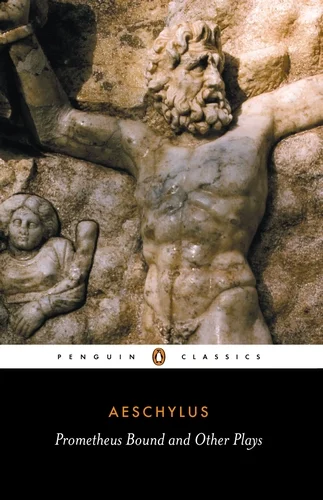
Penguin Classics cover of Prometheus Bound and Other Plays by Aeschylus
c. 479 BCE

Prometheus Bound

Aeschylus

Prometheus is chained in a desolate landscape for defying Zeus and giving fire and knowledge to humanity. Through encounters with gods and wanderers, the tragedy examines tyranny, suffering, resistance, and foreknowledge.

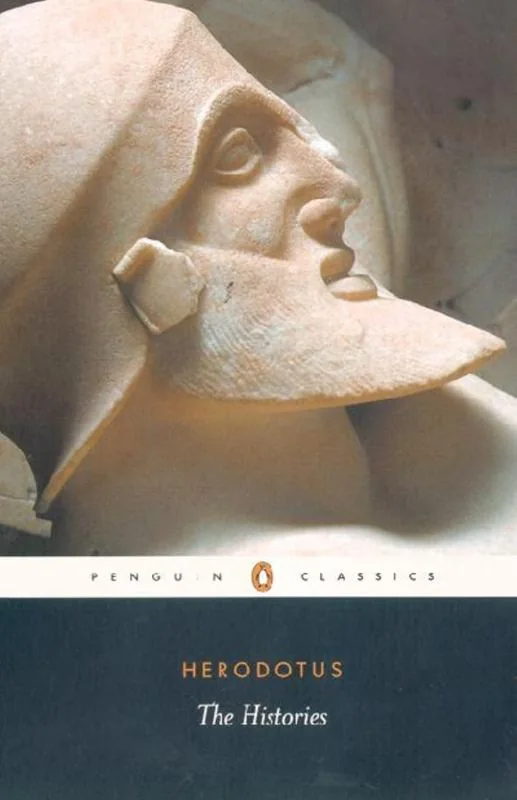
Penguin Classics cover of The Histories by Herodotus
c. 425 BCE

The Histories

Herodotus

Herodotus investigates the causes and course of the Greco-Persian Wars while ranging widely across the peoples, customs, landscapes, and stories of the ancient world. The work combines inquiry, oral testimony, ethnography, and reflection on power, fortune, and historical causation.

Penguin Classics cover of The Symposium by Plato
c. 380 BCE

Symposium

Plato

During a banquet in Athens, Socrates and several companions deliver speeches examining the nature and purpose of love. The dialogue culminates in Socrates' account of Diotima's teaching, which presents desire as an ascent from physical beauty toward knowledge of beauty itself.

Geometric Penguin Classics cover of Plato's Republic
c. 375 BCE

Republic

Plato

Plato's dialogue follows Socrates and his companions as they examine justice in the individual and the state. Their discussion develops an ideal city governed by philosopher-kings and introduces the allegory of the cave.

Cover of Critias by Plato
c. 360 BCE

Critias

Plato

In this unfinished dialogue, Critias recounts the story of ancient Athens and Atlantis, introduced in Plato's Timaeus. The account contrasts an idealized early Athens with the immense but morally corrupt power of Atlantis, before the narrative breaks off.

Penguin Classics cover of Shahnameh: The Persian Book of Kings
1010

Shahnameh

Ferdowsi

Ferdowsi’s monumental Persian epic traces the mythical and historical kings of Iran from the creation of the world to the Arab conquest. Its interwoven tales of heroes, rulers, love, betrayal, and fate preserve a foundational vision of Persian cultural identity.

Oxford World's Classics cover of Leviathan by Thomas Hobbes
1651

Leviathan

Thomas Hobbes

Hobbes develops a systematic account of human nature, political obligation, and the sovereign state against the backdrop of civil conflict. He argues that individuals escape the insecurity of the state of nature by authorizing a common power capable of maintaining peace.

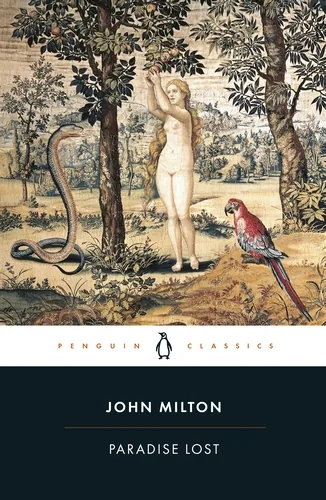
Penguin Classics cover of Paradise Lost by John Milton
1667

Paradise Lost

John Milton

Milton's epic poem recounts Satan's rebellion against God and the temptation and fall of Adam and Eve. Its twelve-book structure examines free will, obedience, ambition, knowledge, and the possibility of redemption.

Oxford World's Classics cover of Faust, Part One by Johann Wolfgang von Goethe
1790

Faust

Johann Wolfgang von Goethe

The scholar Faust, dissatisfied with conventional knowledge, enters a wager with Mephistopheles in pursuit of experience and transcendence. Goethe's dramatic poem examines ambition, temptation, responsibility, love, and the limits of human striving.

Oxford World's Classics cover of the 1818 text of Frankenstein by Mary Shelley
1818

Frankenstein

Mary Shelley

Victor Frankenstein, a young scientist, creates sentient life and recoils from the being he has made. Framed through letters and nested narratives, Shelley's novel explores ambition, responsibility, isolation, education, and the human consequences of creation.

Finely bound first edition of Prometheus Unbound by Percy Bysshe Shelley
1820

Prometheus Unbound

Percy Bysshe Shelley

Shelley's lyrical drama reimagines the myth of Prometheus, who is imprisoned for defying Jupiter and aiding humanity. Rather than ending in reconciliation, the play imagines the tyrant's overthrow and explores liberation, love, and the moral transformation of the world.

Title page of the 1844 first edition of The Unique and Its Property
1844

The Unique and Its Property

Max Stirner

Stirner attacks religious, political, and moral abstractions that demand obedience from the individual. He argues for a radical egoism centered on the singular person and voluntary association.

Penguin Clothbound Classics cover of Moby-Dick by Herman Melville
1851

Moby-Dick

Herman Melville

Sailor Ishmael joins the whaling ship Pequod, whose captain, Ahab, is consumed by his pursuit of the white whale Moby Dick. The novel combines maritime adventure with meditations on obsession, fate, nature, knowledge, and authority.

Penguin Classics cover of The Birth of Tragedy by Friedrich Nietzsche
1872

The Birth of Tragedy

Friedrich Nietzsche

Nietzsche interprets Greek tragedy through the tension between Apollonian form and Dionysian ecstasy. He argues that their union made tragic art possible and examines its decline under the influence of Socratic rationalism.

Penguin Classics cover of Thus Spoke Zarathustra by Friedrich Nietzsche
1883

Thus Spoke Zarathustra

Friedrich Nietzsche

Nietzsche presents his ideas through the speeches and journeys of the prophet Zarathustra, who descends from solitude to address humanity. The poetic work develops themes including the death of God, the overhuman, eternal recurrence, and self-overcoming.

Penguin Pocket Hardbacks cover of Beyond Good and Evil by Friedrich Nietzsche
1886

Beyond Good and Evil

Friedrich Nietzsche

Nietzsche challenges inherited moral systems and examines the assumptions beneath philosophy, religion, culture, and ideas of truth. Through aphorisms and sustained arguments, he develops themes including perspectivism, the will to power, and the creation of values beyond conventional morality.

First-edition cover of Dracula by Bram Stoker
1897

Dracula

Bram Stoker

Solicitor Jonathan Harker travels to Transylvania to assist Count Dracula with a property purchase and becomes trapped in the count's castle. Told through letters, diary entries, and reports, the novel follows Dracula's arrival in England and the efforts of a group of friends to stop him.

Penguin Classics cover of The Will to Power by Friedrich Nietzsche
1901

The Will to Power

Friedrich Nietzsche

This posthumous collection arranges selections from Nietzsche's notebooks around nihilism, values, knowledge, art, and the will to power. Because editors rather than Nietzsche assembled it, the work is read as a historically influential compilation rather than a completed book authored in this final form.

Routledge edition cover of Creative Evolution
1907

Creative Evolution

Henri Bergson

Bergson challenges both mechanistic and strictly teleological accounts of evolution, presenting life as an open-ended creative process associated with the élan vital. He connects biological development with duration, consciousness, instinct, intelligence, and the limits of conceptual thought.

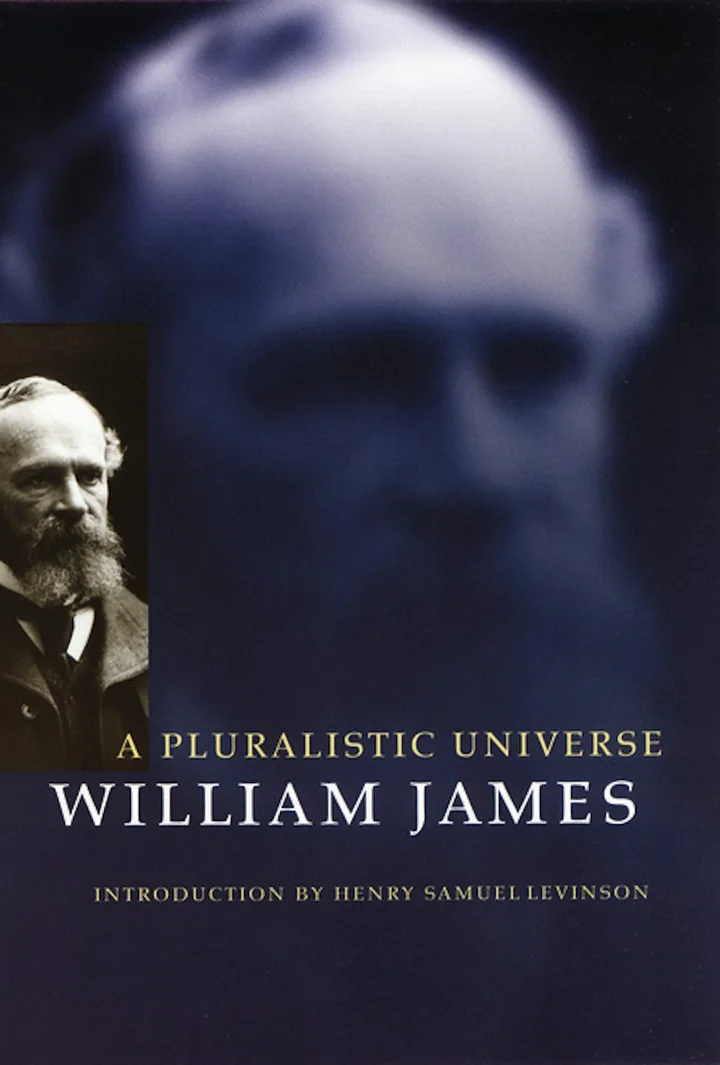
University of Nebraska Press cover of A Pluralistic Universe by William James
1909

A Pluralistic Universe

William James

Drawing on the 1908 Hibbert Lectures, James challenges absolute idealism and argues for a universe composed of genuinely distinct yet interconnected parts. He develops a pluralistic, open-ended metaphysics grounded in lived experience and radical empiricism.

Penguin Classics cover of Demian by Hermann Hesse
1919

Demian

Hermann Hesse

Emil Sinclair recounts his coming of age under the influence of the enigmatic Max Demian, who challenges conventional divisions between good and evil. Hesse's novel explores individuation, spiritual awakening, and the struggle to form an authentic self.

First-edition cover of The Book of the Damned by Charles Fort
1919

The Book of the Damned

Charles Fort

Fort gathers reports of anomalous events—including strange falls, unexplained disappearances, unusual sightings, and other excluded observations—to challenge assumptions about what counts as legitimate knowledge. The book develops his idea of “damned data” for evidence rejected by prevailing scientific frameworks.

MIT Press cover of The Crisis of Parliamentary Democracy by Carl Schmitt
1923

The Crisis of Parliamentary Democracy

Carl Schmitt

Schmitt analyzes the intellectual foundations of parliamentary government, especially openness, public discussion, and representation. Written during the Weimar era, the book argues that mass-party politics and competing democratic claims had eroded the assumptions that gave parliamentarism its legitimacy.

First-edition cover of Manifeste du surréalisme by André Breton
1924

Manifesto of Surrealism

André Breton

Breton's founding statement defines Surrealism as a means of expressing thought beyond the restraints of reason, morality, and conventional aesthetics. Drawing on dreams, psychoanalysis, and automatic writing, it argues for releasing the creative powers of the unconscious.

Schocken Books cover of The Trial by Franz Kafka
1925

The Trial

Franz Kafka

Bank clerk Josef K. is arrested without being told the charge against him and becomes entangled in an opaque judicial system. Kafka's unfinished novel follows his attempts to understand the proceedings while examining bureaucracy, guilt, authority, and alienation.

Early German edition cover of Being and Time
1927

Being and Time

Martin Heidegger

Heidegger investigates the meaning of being through an analysis of human existence, which he calls Dasein. The work develops accounts of care, temporality, mortality, and the distinction between authentic and inauthentic life.

1927 first-edition cover of Steppenwolf
1927

Steppenwolf

Hermann Hesse

Harry Haller, an alienated intellectual, believes himself divided between a respectable bourgeois self and a solitary wolf. Encounters with Hermine and the surreal Magic Theater force him to confront the many-sided nature of his identity.

Modern Classics cover of Story of the Eye by Georges Bataille
1928

Story of the Eye

Georges Bataille

An unnamed narrator and Simone pursue an escalating series of erotic and sacrilegious transgressions across France and Spain. Bataille's surreal novella links desire, violence, death, and recurring images of eyes, eggs, and circular forms.

Vintage Classics cover of Brave New World
1932

Brave New World

Aldous Huxley

In the World State, human beings are engineered into castes, conditioned for predetermined roles, and pacified by consumption and the drug soma. Huxley’s dystopian novel examines technological control, manufactured happiness, individuality, and the costs of social stability.

Dover edition cover of Economic and Philosophic Manuscripts of 1844
1932

Economic and Philosophic Manuscripts of 1844

Karl Marx

Written in 1844 and first published in full in 1932, these notebooks develop Marx’s early account of alienated labor under private property and industrial capitalism. They connect political economy with philosophical questions about human activity, social relations, and species-being.

University of Chicago Press cover of The Concept of the Political by Carl Schmitt
1932

The Concept of the Political

Carl Schmitt

Schmitt defines the political through the distinction between friend and enemy, understood as the possibility of collective conflict. He examines the relationship between politics, the state, and war while criticizing liberal attempts to neutralize political antagonism.

Penguin English Library cover of At the Mountains of Madness by H. P. Lovecraft
1936

At the Mountains of Madness

H. P. Lovecraft

Geologist William Dyer recounts an Antarctic expedition that uncovers unknown life-forms and the ruins of an ancient city beyond a vast mountain range. His warning blends scientific discovery with cosmic horror as the explorers reconstruct a history older than humanity.

Early Persian-language cover of The Blind Owl
1936

The Blind Owl

Sadegh Hedayat

An unnamed painter records a series of obsessive encounters as memory, dream, and reality begin to collapse into one another. The narration circles images of love, death, isolation, and repetition.

First American edition cover of The New World Order by H. G. Wells
1940

The New World Order

H. G. Wells

Written during the opening months of the Second World War, Wells argues that lasting peace requires a planned global society grounded in human rights, education, and economic security. He criticizes nationalism and considers how an international order might prevent recurring war.

Penguin Modern Classics cover of Caligula and Other Plays by Albert Camus
1944

Caligula

Albert Camus

After the death of his sister and lover Drusilla, Emperor Caligula confronts the apparent meaninglessness of existence. He turns his demand for the impossible into a brutal experiment in absolute freedom, forcing his court to confront nihilism, power, and revolt.

Cover of Last Writings, containing Nothingness and the Religious Worldview
1945

Nothingness and the Religious Worldview

Kitarō Nishida

In his final completed essay, Nishida considers religious awareness through absolute nothingness and the self's encounter with its own mortality. He describes religious life as a movement of self-negation rather than an escape from the everyday world.

Cover of The Blue Octavo Notebooks by Franz Kafka
1948

The Blue Octavo Notebooks

Franz Kafka

These notebooks gather aphorisms, parables, story fragments, and philosophical observations Kafka wrote between 1917 and 1919. Detached from his regular diaries, they concentrate his reflections on truth, guilt, exile, faith, and the limits of language.

Penguin Classics cover of Nineteen Eighty-Four
1949

Nineteen Eighty-Four

George Orwell

In the totalitarian state of Oceania, Winston Smith alters historical records for the Ministry of Truth while privately questioning the Party’s rule. Orwell’s novel explores surveillance, propaganda, language, memory, and the systematic destruction of independent thought.

Vintage paperback cover of Foundation by Isaac Asimov
1951

Foundation

Isaac Asimov

As the Galactic Empire approaches collapse, mathematician Hari Seldon uses psychohistory to establish a Foundation at the edge of the galaxy. Its members confront a series of political and religious crises intended to shorten the coming age of disorder.

University of Chicago Press cover of Natural Right and History by Leo Strauss
1953

Natural Right and History

Leo Strauss

Strauss challenges historicism and moral relativism by reconsidering whether standards of justice can be grounded in nature rather than convention. Through readings of classical and modern political philosophers, he traces the transformation and crisis of the natural-right tradition.

Faber and Faber cover of Lord of the Flies by William Golding
1954

Lord of the Flies

William Golding

After a plane crash strands a group of British schoolboys on an uninhabited island, they attempt to organize themselves without adult authority. Golding’s allegorical novel explores leadership, fear, group violence, and the fragility of civilized order.

Harper Perennial Modern Thought cover of The Question Concerning Technology and Other Essays
1954

The Question Concerning Technology

Martin Heidegger

Heidegger argues that technology is not merely a collection of tools but a way of revealing the world. Modern technology, through what he calls enframing, orders beings as standing-reserve while also containing the possibility of a freer relationship to technology.

Signet cover of Atlas Shrugged
1957

Atlas Shrugged

Ayn Rand

Railroad executive Dagny Taggart struggles to keep her company operating as leading industrialists and innovators mysteriously disappear. Rand’s novel combines a dystopian mystery with an extended defense of reason, individualism, productive achievement, and laissez-faire capitalism.

Book cover of Eroticism by Georges Bataille
1957

Eroticism

Georges Bataille

Bataille studies erotic life through the linked ideas of taboo and transgression. He connects sexuality, sacrifice, death, and the sacred across historical and religious examples.

Princeton University Press cover of Flying Saucers
1958

Flying Saucers

C. G. Jung

Jung approaches reports of flying saucers primarily as psychological and cultural phenomena, asking what their circular forms and celestial origins reveal about the collective imagination. He interprets the UFO as a modern myth and archetypal projection emerging amid Cold War anxiety and spiritual uncertainty.

Book cover of Physics and Philosophy by Werner Heisenberg
1958

Physics and Philosophy

Werner Heisenberg

Heisenberg explains the conceptual foundations of quantum mechanics for a general audience. He also compares modern physics with earlier philosophical traditions and discusses how scientific language shapes what can be observed.

Orb Books cover of The Big Time by Fritz Leiber
1958

The Big Time

Fritz Leiber

In a room outside ordinary spacetime, entertainers and soldiers recuperate between missions in the Change War, a conflict whose rival factions repeatedly rewrite history. When a nuclear bomb is hidden inside the isolated station, the group must confront suspicion, loyalty, and the cost of endless war.

Cover of Prometheus: Archetypal Image of Human Existence by Carl Kerényi
1959

Prometheus: Archetypal Image of Human Existence

Carl Kerényi

Kerényi studies the Greek myth of Prometheus from its earliest literary sources through later interpretations by writers including Goethe and Shelley. Combining classical scholarship with Jungian thought, he considers Prometheus as an enduring image of human creativity, suffering, and transformation.

Book cover of Science, Politics, and Gnosticism by Eric Voegelin
1959

Science, Politics, and Gnosticism

Eric Voegelin

Voegelin interprets modern ideological movements as forms of gnosticism that seek to replace transcendent order with human-made schemes of salvation within history. Across two essays, he examines the intellectual and political consequences of attempts to transform the conditions of human existence.

Cover of The Sacred Mushroom by Andrija Puharich
1959

The Sacred Mushroom

Andrija Puharich

Puharich recounts experiments involving trance, extrasensory perception, and mushroom-related religious traditions while proposing links between altered states and ancient ritual. The book blends case reports, historical speculation, and parapsychological interpretation.

1962 first-edition cover of The Man in the High Castle
1961

The Man in the High Castle

Philip K. Dick

In an alternate United States divided between victorious Axis powers, several characters confront political domination, forged artifacts, and uncertain histories. A forbidden novel within the story imagines a different outcome to World War II.

Book cover of Beyond Telepathy by Andrija Puharich
1962

Beyond Telepathy

Andrija Puharich

Puharich proposes a physiological and physical framework for telepathy and other forms of extrasensory perception. Drawing on experiments and speculative theory, he connects altered states, nervous-system processes, and what he calls a mobile center of consciousness.

First-edition cover of The Structure of Scientific Revolutions by Thomas S. Kuhn
1962

The Structure of Scientific Revolutions

Thomas S. Kuhn

Kuhn argues that scientific development alternates between periods of normal science under shared paradigms and revolutionary shifts prompted by accumulating anomalies. He rejects a simply cumulative model of progress and emphasizes the historical communities and conceptual frameworks that shape inquiry.

Cover of Origins of the Sexual Impulse by Colin Wilson
1963

Origins of the Sexual Impulse

Colin Wilson

Wilson surveys theories of sexual behavior and argues against purely mechanistic or Freudian accounts of desire. Drawing on existential psychology and literature, he presents sexuality as shaped by consciousness, imagination, and symbolic response.

2020 English-language cover of Theory of the Partisan by Carl Schmitt
1963

Theory of the Partisan

Carl Schmitt

Schmitt examines the partisan as an irregular combatant whose political commitment, mobility, and relationship to territory distinguish this figure from conventional soldiers. Drawing on military and legal history, he traces how partisan warfare transforms ideas of enmity, legitimacy, and modern conflict.

Book cover of Counterfeit World by Daniel F. Galouye
1964

Counterfeit World (Simulacron-3)

Daniel F. Galouye

A scientist working on a vast computer simulation investigates the death of its creator and the disappearance of a colleague. His search forces him to confront the possibility that his own reality may itself be an artificial world.

First-edition cover of Nova Express by William S. Burroughs
1964

Nova Express

William S. Burroughs

Using cut-up and fold-in techniques, Burroughs depicts a struggle between the Nova Mob and agents attempting to expose systems of addiction, language, and control. The experimental novel treats words and images as viral technologies capable of shaping reality.

Cover of Passport to Magonia by Jacques Vallée
1969

Passport to Magonia

Jacques Vallée

Vallée compares modern UFO encounter reports with older traditions of fairies, apparitions, and other extraordinary beings. He argues that the similarities challenge a purely extraterrestrial interpretation and may point to a broader cultural and psychological phenomenon.

Penguin cover of The Archaeology of Knowledge by Michel Foucault
1969

The Archaeology of Knowledge

Michel Foucault

Foucault sets out a method for analyzing the rules that organize statements, concepts, and fields of knowledge within particular historical periods. Rejecting continuous histories of ideas, he focuses on discontinuities, archives, and the formation of discourse.

Cover of The Prometheus Project by Gerald Feinberg
1969

The Prometheus Project

Gerald Feinberg

Physicist Gerald Feinberg surveys contemporary scientific knowledge and asks how humanity might define shared long-range goals. He proposes an international institution devoted to evaluating future possibilities and coordinating ambitious projects for human development.

Original hardcover cover of Psychic Discoveries Behind the Iron Curtain by Sheila Ostrander and Lynn Schroeder
1970

Psychic Discoveries Behind the Iron Curtain

Sheila Ostrander and Lynn Schroeder

Ostrander and Schroeder survey Cold War-era research into telepathy, psychokinesis, hypnosis, bioenergy, and related phenomena in the Soviet Union and Eastern Europe. Drawing on interviews and laboratory visits, they present claims that helped introduce Western readers to parapsychological work behind the Iron Curtain.

Valancourt Books cover of The God of the Labyrinth by Colin Wilson
1970

The God of the Labyrinth

Colin Wilson

Gerard Sorme is hired to investigate an obscure eighteenth-century libertine and follows a trail through archives, secret societies, and murder. Wilson's philosophical mystery combines an investigation of sexuality and power with a labyrinthine conspiracy narrative.

1970 hardcover dust-jacket design for Time and Again by Jack Finney
1970

Time and Again

Jack Finney

Illustrator Si Morley is recruited into a secret government experiment that sends him from modern New York to the city of 1882. Finney combines time travel with historical photographs and drawings as Si becomes increasingly involved in the past.

Harper Perennial cover of Poetry, Language, Thought by Martin Heidegger
1971

Poetry, Language, Thought

Martin Heidegger

In Albert Hofstadter's translations, this collection brings together Heidegger's essays on art, poetry, dwelling, language, and thinking, including “The Origin of the Work of Art.” It examines how language and poetic creation disclose truth and shape humanity's relation to being.

City Lights edition cover of The Gnostics
1973

The Gnostics

Jacques Lacarrière

Lacarrière surveys the ancient Gnostic movements through their surviving writings and the accounts of their opponents. His literary study emphasizes their cosmologies, rejection of the material world, and pursuit of direct, liberating knowledge of the divine.

First-edition cover of Up-Wingers by Fereidoun M. Esfandiary
1973

Up-Wingers: A Futurist Manifesto

Fereidoun M. Esfandiary (FM-2030)

Esfandiary rejects the inherited left-right political spectrum in favor of an 'up-wing' orientation toward technological progress, mobility, and global identity. The manifesto anticipates transhumanist ideas about transforming bodies, institutions, and social relationships.

Illustrated Verso edition cover of Against Method by Paul Feyerabend
1975

Against Method

Paul Feyerabend

Feyerabend argues that no fixed set of methodological rules can account for the history of scientific progress. Through historical cases, he defends a pluralistic approach that he calls epistemological anarchism.

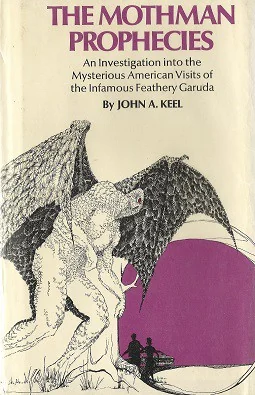
First-edition cover of The Mothman Prophecies by John A. Keel
1975

The Mothman Prophecies

John A. Keel

Keel recounts his investigation of strange sightings, alleged Men in Black, and other anomalous events around Point Pleasant, West Virginia, in 1966–67. He connects these reports to a broader pattern of folklore, UFO phenomena, and the Silver Bridge disaster.

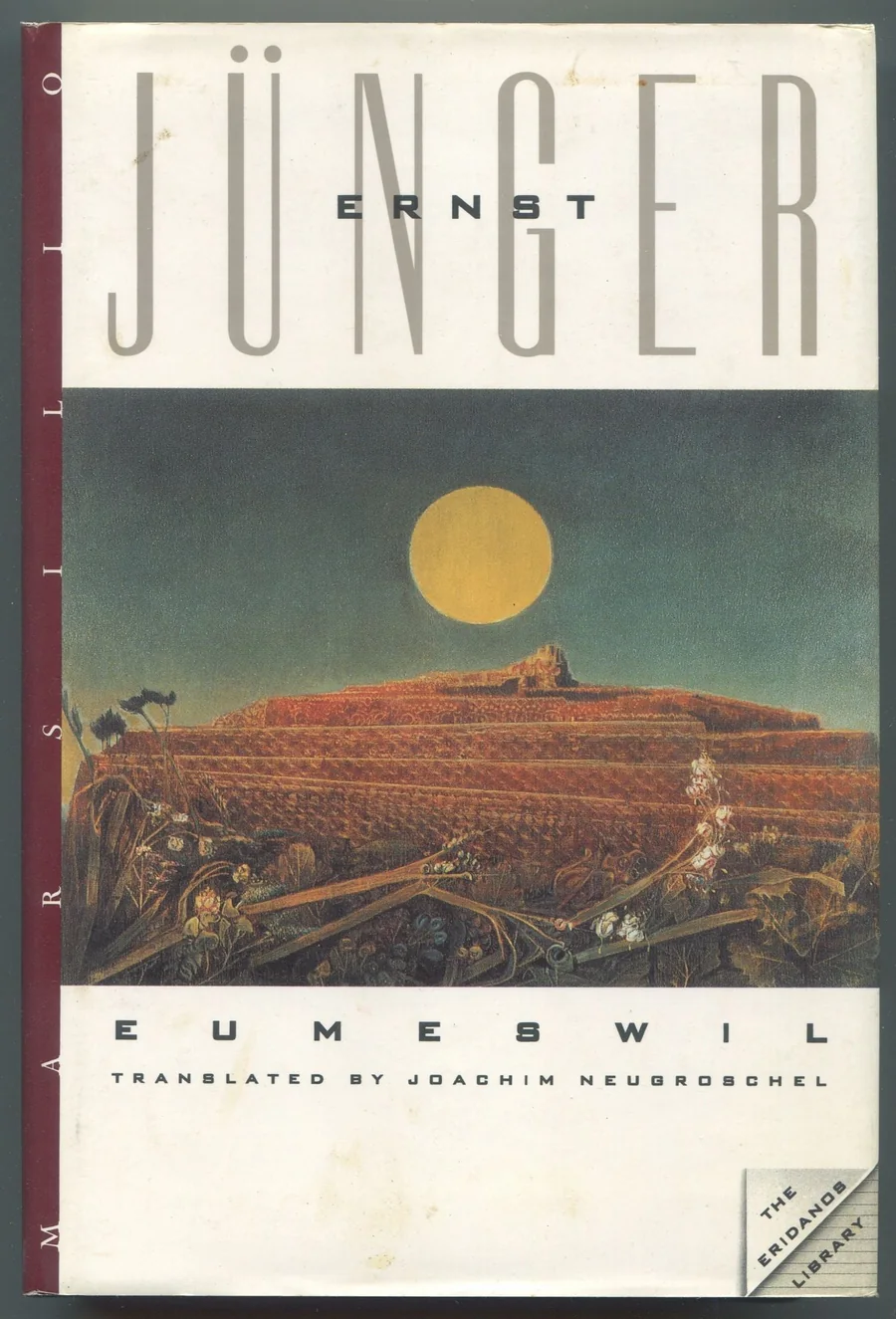
English-language cover of Eumeswil by Ernst Jünger
1977

Eumeswil

Ernst Jünger

Historian Martin Venator serves as a night steward in the court of the Condor, ruler of the posthistorical city-state Eumeswil. Through Venator's inward detachment, Jünger develops the figure of the Anarch, an individual who preserves inner sovereignty under political domination.

Cover of ESP and Psychokinesis by Stephen E. Braude
1979

ESP and Psychokinesis

Stephen E. Braude

Braude critically examines philosophical and empirical questions surrounding extrasensory perception and psychokinesis. He assesses experimental evidence, conceptual objections, and the implications that genuine psi phenomena would have for accounts of mind, causation, and scientific explanation.

Book cover of Messengers of Deception by Jacques Vallée
1979

Messengers of Deception

Jacques Vallée

Vallée examines UFO contactee movements and the cults that form around purported messages from nonhuman intelligences. He argues that belief, manipulation, and social control may be as important to the phenomenon as claims of extraterrestrial visitation.

Cover of The Excalibur Briefing by Thomas E. Bearden
1980

The Excalibur Briefing

Thomas E. Bearden

Bearden proposes a speculative framework connecting electromagnetism, biological processes, consciousness, and reported paranormal phenomena. The book assembles unconventional interpretations of physics, psychology, and military technology into a unified model that lies outside established scientific consensus.

Routledge Classics cover of Wholeness and the Implicate Order by David Bohm
1980

Wholeness and the Implicate Order

David Bohm

Bohm challenges fragmented ways of understanding reality and develops the implicate order, in which observable phenomena unfold from a deeper, undivided whole. He connects this framework to quantum theory, language, thought, consciousness, and scientific inquiry.

1981 Bantam paperback cover of VALIS by Philip K. Dick
1981

VALIS

Philip K. Dick

Horselover Fat interprets a beam of pink light as contact with a transcendent intelligence called VALIS. Blending autobiography, theology, science fiction, and metafiction, the novel follows his attempt to determine whether the experience was revelation, technology, or delusion.

Revised-edition cover of The Limits of Influence by Stephen E. Braude
1986

The Limits of Influence

Stephen E. Braude

Braude examines evidence offered for large-scale psychokinesis, especially historical reports of physical mediumship and apparitions. He also considers the methodological and philosophical problems such claims pose for scientific inquiry.

First-edition cover of Margins of Reality by Robert G. Jahn and Brenda J. Dunne
1987

Margins of Reality

Robert G. Jahn and Brenda J. Dunne

Jahn and Dunne describe experiments from the Princeton Engineering Anomalies Research program and use them to question conventional boundaries between consciousness and physical processes. The book presents their findings alongside discussions of measurement, intention, and the relationship between mind and matter.

Paperback cover of The Gods of Eden by William Bramley
1989

The Gods of Eden

William Bramley

Bramley surveys wars, religions, political power, and reports of extraterrestrial activity to argue for a hidden influence on human history. The book combines historical speculation with a broad theory about recurring forces behind conflict and social control.

1991 hardcover cover of The Holographic Universe by Michael Talbot
1991

The Holographic Universe

Michael Talbot

Talbot presents David Bohm's and Karl Pribram's holographic models as a framework for understanding the relationship between mind and cosmos. He extends these ideas to discussions of perception, memory, quantum phenomena, and reported anomalous experiences.

Book cover of Forbidden Archeology by Michael A. Cremo and Richard L. Thompson
1993

Forbidden Archeology

Michael A. Cremo and Richard L. Thompson

Cremo and Thompson survey reports of archaeological and paleoanthropological finds that they argue conflict with conventional accounts of human evolution. The book contends that evidence for extreme human antiquity has been filtered or dismissed, a thesis widely disputed by mainstream scholars.

Cover of From Scythia to Camelot
1993

From Scythia to Camelot

C. Scott Littleton and Linda A. Malcor

Littleton and Malcor argue that important elements of Arthurian legend derive partly from Alanic and Sarmatian traditions carried westward from the Eurasian steppe. They compare Nart sagas, archaeology, and medieval texts to reinterpret motifs including Lancelot, the sword in the stone, and the Holy Grail.

Cover of Prometheus the Awakener by Richard Tarnas
1993

Prometheus the Awakener

Richard Tarnas

Tarnas examines the mythic figure of Prometheus and the astrological symbolism associated with Uranus, linking archetypal patterns to biographical and historical change. The essay combines depth psychology, cultural history, and astrology in an interpretive study of transformation.

Cover of Fingerprints of the Gods by Graham Hancock
1995

Fingerprints of the Gods

Graham Hancock

Hancock surveys ancient monuments, myths, maps, and astronomical alignments in support of his disputed theory that an advanced civilization existed before recorded history. The book presents an influential work of alternative archaeology whose conclusions are rejected by mainstream archaeologists and geologists.

Book cover of The Clash of Civilizations and the Remaking of World Order by Samuel P. Huntington
1996

The Clash of Civilizations and the Remaking of World Order

Samuel P. Huntington

Expanding his earlier essay, Huntington argues that cultural and civilizational identities would increasingly shape alliances and conflicts after the Cold War. The book outlines several major civilizations and considers their implications for international order.

Volume 1 cover of Reincarnation and Biology by Ian Stevenson
1997

Reincarnation and Biology

Ian Stevenson

Across two volumes, Stevenson documents cases in which children’s birthmarks or congenital abnormalities were reported to correspond with injuries of deceased people whose lives they claimed to remember. The work presents case histories, photographs, and medical records while considering possible explanations.

University of California Press cover of Tantric Visions of the Divine Feminine
1997

Tantric Visions of the Divine Feminine

David R. Kinsley

Kinsley examines the ten Mahāvidyās, a group of Hindu tantric goddesses whose forms encompass beauty and terror, creation and destruction, sexuality and death. Drawing on texts, ritual traditions, and iconography, he explains how these figures challenge conventional ideas of divinity and spiritual power.

Early-edition cover of Penetration by Ingo Swann
1998

Penetration

Ingo Swann

Swann presents an autobiographical account of his alleged recruitment by a clandestine organization for experiments involving remote perception, the Moon, and extraterrestrial activity. He connects these claims to broader reflections on human and alien telepathy.

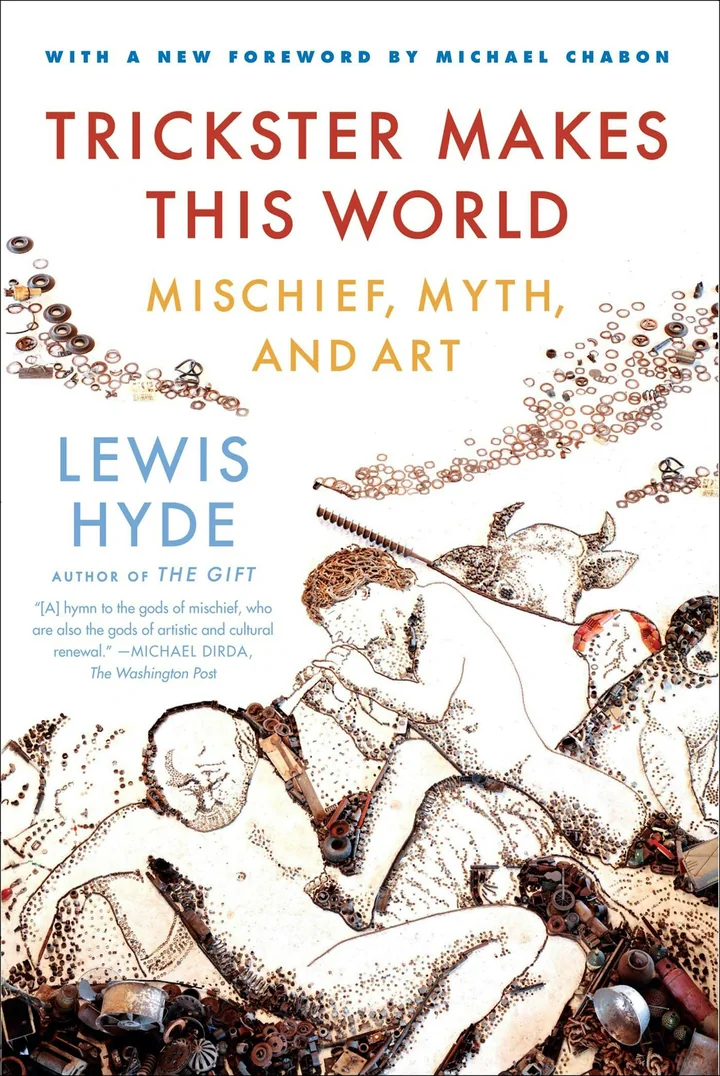
Farrar, Straus and Giroux cover of Trickster Makes This World by Lewis Hyde
1998

Trickster Makes This World

Lewis Hyde

Hyde examines trickster figures such as Hermes, Eshu, Coyote, and Raven as boundary-crossers whose mischief renews culture. Drawing on mythology, anthropology, and art, he argues that creative intelligence thrives by disrupting categories and remaking social worlds.

Cover of The Atlantis Blueprint by Colin Wilson and Rand Flem-Ath
2000

The Atlantis Blueprint

Colin Wilson and Rand Flem-Ath

Wilson and Flem-Ath connect ancient monuments and sacred sites through a speculative theory of an advanced prehistoric maritime civilization centered in Antarctica. Drawing on earth-crust displacement and alternative archaeology, they argue that the civilization's knowledge survived in a global pattern of sites.

Cover of The Hunt for Zero Point by Nick Cook
2001

The Hunt for Zero Point

Nick Cook

Aerospace journalist Nick Cook investigates claims that governments and defense contractors pursued antigravity and zero-point-energy technologies in secret. His inquiry moves through postwar aviation research, classified programs, and accounts of experimental German technology while weighing a mixture of documents, interviews, and speculation.

Cover of The Trickster and the Paranormal by George P. Hansen
2001

The Trickster and the Paranormal

George P. Hansen

Hansen uses the trickster archetype to examine psychic phenomena, UFO reports, spiritualism, and the social worlds that form around them. Drawing on anthropology, folklore, sociology, and depth psychology, he argues that paranormal events repeatedly appear at boundaries where categories, institutions, and authority become unstable.

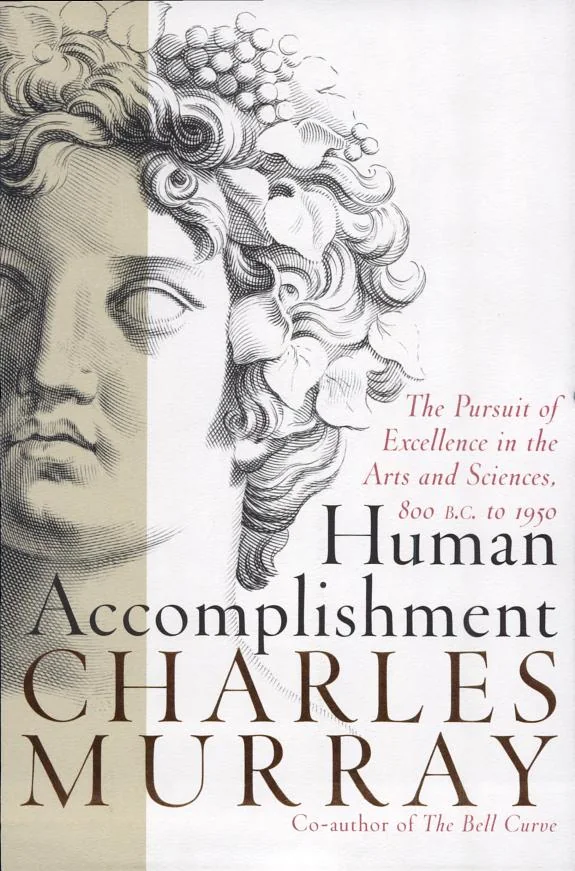
Cover of Human Accomplishment by Charles Murray
2003

Human Accomplishment

Charles Murray

Murray surveys achievement in the arts and sciences from 800 BCE to 1950, using reference works to construct inventories and measures of eminence. He then examines how major accomplishments have varied across fields, periods, and places and proposes conditions that may foster excellence.

Duke University Press cover of The Edge of Surrealism by Roger Caillois
2003

The Edge of Surrealism

Roger Caillois

Edited by Claudine Frank, this reader gathers thirty-two essays by Roger Caillois on surrealism, myth, games, mimicry, the sacred, and the natural world. The collection traces his engagement with the surrealist avant-garde and the College of Sociology while showing the range of his social and aesthetic thought.

Cover of Radical Evolution by Joel Garreau
2005

Radical Evolution

Joel Garreau

Garreau examines how advances in genetics, robotics, information technology, and nanotechnology could transform human abilities and identity. Through interviews with scientists and futurists, he organizes possible outcomes into competing scenarios of technological promise, catastrophe, and social adaptation.

Palgrave Macmillan cover of Modernism and Fascism
2007

Modernism and Fascism

Roger Griffin

Griffin interprets fascism as a modernist political project that promised national and cultural rebirth rather than a simple rejection of modernity. Comparing Fascist Italy and Nazi Germany, he examines how revolutionary myths, aesthetics, technology, and state power were mobilized to create a new order.

Second-edition cover of UFOs & Nukes by Robert Hastings
2008

UFOs & Nukes

Robert L. Hastings

Hastings compiles declassified documents and testimony from former military personnel concerning reported UFO activity at nuclear weapons facilities. The book examines alleged incidents at American and Soviet sites and argues that the pattern warrants official scrutiny.

Cover of Baphomet: The Temple Mystery Unveiled
2015

Baphomet

Tracy R. Twyman and Alexander Rivera

Twyman and Rivera investigate the historical and symbolic development of Baphomet, from accusations made against the Knights Templar to the figure’s later goat-headed form. The book evaluates documentary evidence and proposes connections among Templar traditions, Gnosticism, alchemy, and other esoteric currents.

Book cover of Greek Buddha by Christopher I. Beckwith
2015

Greek Buddha

Christopher I. Beckwith

Beckwith argues that Pyrrho encountered early Buddhist thought during Alexander the Great's campaigns in Central Asia and India. The book uses that claim to reinterpret the beginnings of Greek skepticism and several early Buddhist concepts.

MIT Press cover of Russian Cosmism
2018

Russian Cosmism

Boris Groys

Groys gathers writings by Russian cosmists who imagined the scientific transformation of humanity, the conquest of death, bodily resurrection, and expansion into space. The anthology presents cosmism as a distinctive intersection of philosophy, religion, technology, politics, and art.

Cover of Alien Information Theory by Andrew Gallimore
2019

Alien Information Theory

Andrew Gallimore

Gallimore combines neuroscience, information theory, and speculative metaphysics to propose an account of the worlds and entities reported during intense DMT experiences. He presents the brain as an interface that ordinarily constrains access to a wider informational reality.

Artwork sources

Historical covers and identification posters are locally optimized from Open Library, Wikipedia, and Wikimedia Commons. Copyright remains with the respective rights holders.